
Klis Fortress The Key to Dalmatia
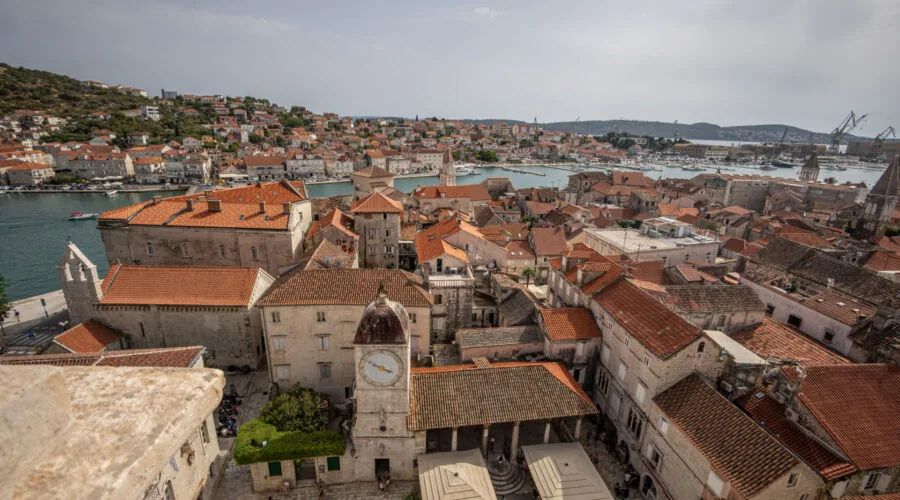
There's a reason every ruler who ever wanted to control this part of the Adriatic built their stronghold here. Klis Fortress sits on a narrow ridge high above Split, commanding the only natural pass between the coast and the Dalmatian hinterland. For over 2,000 years it has changed hands between Illyrian chiefs, Croatian kings, Ottoman armies and Venetian admirals each leaving their mark on the stone. Walk its ramparts today and you're walking the same ground where Croatian nobles made their last stand against the Ottoman Empire for over a century. If that sounds familiar, there's a reason: this is also the filming location for Meereen in Game of Thrones. But the real history here is even more dramatic than the show. From the fortress walls, the view stretches from Split's rooftops all the way to the open sea. It's one of the finest panoramas in all of Dalmatia and almost no organised tour stops long enough to actually take it in. Discover: Over 2,000 years of layered history in a single site The seat of medieval Croatian kings Fortifications built to withstand Ottoman sieges One of Croatia's most iconic Game of Thrones locations Sweeping views across Split and the Adriatic Salona The Lost Roman Capital A few kilometres outside Split, hidden in plain sight behind a low stone wall, lies one of the most important Roman sites in Europe and one of the least visited. Salona was the capital of the Roman province of Dalmatia. At its peak, it was home to more than 60,000 people, with a full amphitheatre, basilicas, forum, city walls, aqueducts and early Christian churches. It produced emperors, bishops and martyrs. Then, in the 7th century, the city was sacked and abandoned. Its inhabitants fled to the coast and built their homes inside the palace of a Roman emperor that settlement became modern day Split. Today you can walk through Salona's ruins in the open air, without the queues or guided tour groups that crowd better known Roman sites. The scale of what was here becomes clear slowly, as you move from one structure to the next: the curve of the amphitheatre, the long line of a basilica wall, the carved stone of a Roman cemetery. It's the kind of site historians describe as underrated and travellers remember for years. Discover: The ruins of a Roman city that once held 60,000 people An ancient amphitheatre, basilicas, and early Christian churches One of Croatia's most significant and least-crowded archaeological sites The origin story of Split itself Trogir A Living Museum by the Sea Your day ends exactly where history meets the present: on the stone promenade of Trogir, a small coastal town that has barely changed in 700 years. Built on a tiny island connected to the mainland by a narrow bridge, Trogir is a UNESCO World Heritage Site that feels less like a tourist attraction and more like a real town because it is one. People live here. Café owners set out their chairs every morning. Fishermen tie their boats alongside the waterfront. And in the middle of it all stands the Cathedral of St Lawrence, one of the finest examples of Romanesque Gothic architecture in Central Europe, its carved stone portal a masterpiece that took 200 years to complete. Walk the streets, find a table for lunch, explore at your own pace. There's no rush. Your driver will wait, and the afternoon is yours. Discover: A UNESCO listed medieval island town in exceptional condition The Cathedral of St Lawrence and its legendary carved portal Venetian towers, Baroque palaces and ancient city walls A relaxed waterfront ideal for lunch or a long coffee